How are the grocery prices where you live? In Southern CA, wowzaaa, things are rough! Honestly, a dozen eggs are $7.99 right now… not even fancy, organic eggs!
It feels like we’re all just always on a budget. But, are we really meal planning in the most budget friendly way?
Today I’m walking you through my tried and true money savings tips when it comes to grocery shopping on the cheap!
This is the exact method we used when we were making the lowest income we’ve ever made, to the highest income! We use it, because it works!
Groceries are really the biggest portion of our budget (besides housing) because we like to eat well, and we don’t do much in terms of outings or frivolous spending. And, having Celiac Disease, gluten free options are always super expensive, so we need to save where we can!
Understand Your Grocery Goals
What’s important to you when it comes to feeding your family? Will you sacrifice quality in the sake of saving money? Is it always organic no matter the price? Or maybe it’s whatever’s on sale for you!
Understanding where you will pinch, and where you will hold your boundaries when it comes to what you consume is really important for your own mind games. We, as the mothers of the home, can feel like it’s up to us to make the decisions of where to spend, where to save. But I’m telling you right now, I will NOT under any circumstances buy generic or budget Mayonnaise. I just wont. I’ve done it in my twenties and it’s never ended up good for me. So if we need mayonnaise, I don’t blink an eye on anything that’s on sale, I head to my Hellmans and I grab it, no matter the price (if I really need it for a specific recipe). And I don’t feel bad about it.
Getting something that’s ‘On Sale‘ that your family won’t eat, or that no one actually likes isn’t a way to save money, it’s a way to waste money.
5 Steps to Meal Plan on a Budget
Step One: The Prep Work
Meals are an every single day situation, sorry, there’s no avoiding it (especially if you have a toddler who likes to snack, like mine)… I like to keep a handy list of the meals I KNOW my family likes, and that wont cause any fuss!
Create a list of meals in each of your needed categories (do you pack breakfast for your husband before he goes to work, or do you need quick grab and go snacks for the kids? Are lunches bought at school, or are you making them?).
Step Two: What’s on Sale?
We’re sticking to a budget here. If you’re just meal planning, then disregard this step and shop away!
I have one major grocery chain I like… Ralphs! But, knowing that another (Vons) sometimes has better deals, I’ll look at both grocery ads and decide where I’m shopping for the week. I like to meal plan and shop for the week, but you can tackle longer if you’d like! Really depends how much space you have, and how many of your items are fresh and will go bad before you use them.
I’m a printed circular ad type of gal. I want the physical paper to look at, so I can circle everything that’s on sale that my family would eat.
Step Three: Decide on Your Meals for the Week
Once I see everything that’s on sale within our preferences, I start to look at my favorite meals and see what makes the most sense this week.
Is there a great sale on hamburger meat? Then tacos, or spaghetti may be a good option! I like to buy the 3 lb log, cook it all, and do half for tacos one night, and half for spaghetti the next day!
I strictly meal plan for dinners, and then with breakfasts and lunches, I have an idea of what I want to make for the week, and make sure I get those items, but we’re a lot more relaxed when it comes to breakfast and lunches!
Step Four: Ingredient Dump
Write out the meals you’ve decided on along the top of a sheet of paper (I like physical, but you could do this on a word doc or in your notes app) and start to list every ingredient you need to make that meal.
If the ingredient is going to need things like spices I know I have (I do this in the kitchen so I can open cabinets, check the freezer, and make sure I have items), then I don’t necessarily add those items to the list, but any main ingredient items get added underneath the meal.
It would look something like this across the top of your sheet of paper…
Ground Beef Tacos
- Ground Beef
- Corn Tortillas
- Salsa
- Sour Cream
- Black Olives
- Hot Sauce
Spaghetti & Cheese Bread
- Ground Beef
- Pasta
- Sauce x2
- Parmesan
- Bread
- Mozzarella
Chicken, Rice & Broccoli
- Chicken Thighs
- White Rice
- Broccoli
Once I have everything written out, I go through the list and cross out anything I already have for that meal, that I don’t need to purchase from the grocery store.
This is really helpful for me to see visually everything that we’re planning for.
It’s here where I’ll change things up, and take a look at what I can swap to make more use of a sale item.
For example… if I wanted to do spaghetti but chicken thighs were on sale this week, I’d swap the ground beef for chicken and do a chicken pasta this week. If I know bread isn’t on sale (and gluten free bread is expensiiiiive), and say I know I need to pack a sandwich lunch for my toddler two days this week, I may remove the cheesy bread from our spaghetti night so we can save that bread for the sandwiches I need to make.
Step Five: Coupons & Deals
Once you have your grocery list set, make sure you go through your grocery store app (or on their website), and click any digital coupons they may be promoting! I’ve missed major coupons before because I though they were just regular deals, but they were those stinkin digital ones you have to select!
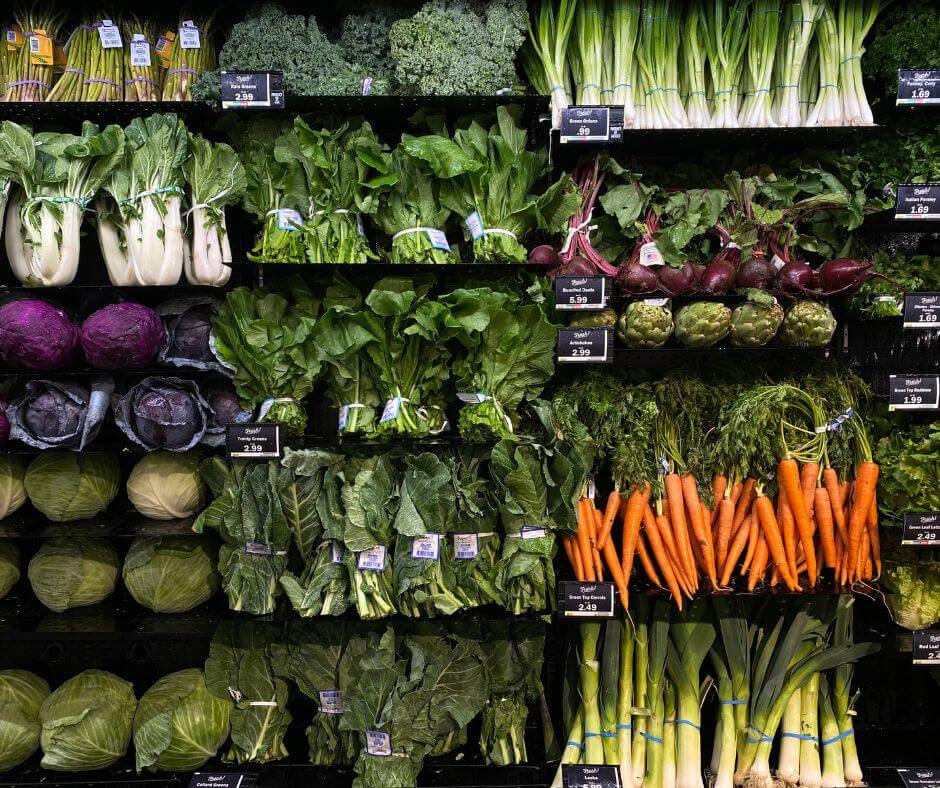
A Few General Meal Planning Tips
- Store any leftovers separately so you can make different meals from the same items! If we have pasta, I always store the pasta on it’s own so if we want spaghetti again we can, but… if there’s just a little pasta left and I want to do noodles and butter/parmesan and lemon for myself for lunch, I can!
- Buy in bulk and separate out. I gave my best example here earlier… I like to buy the 3lb ground beef log so I can do half for tacos and half for spaghetti! That way we don’t get sick of just tacos for three days straight or spaghetti over and over!
- Always check price per ounce! I was truly mind blown when I found this out in my twenties! A smaller, cheaper item isn’t always the best deal. It may be cheaper for your wallet in that exact moment, but if you look at the price per ounce, the larger, slightly more expensive item may be a better buy!
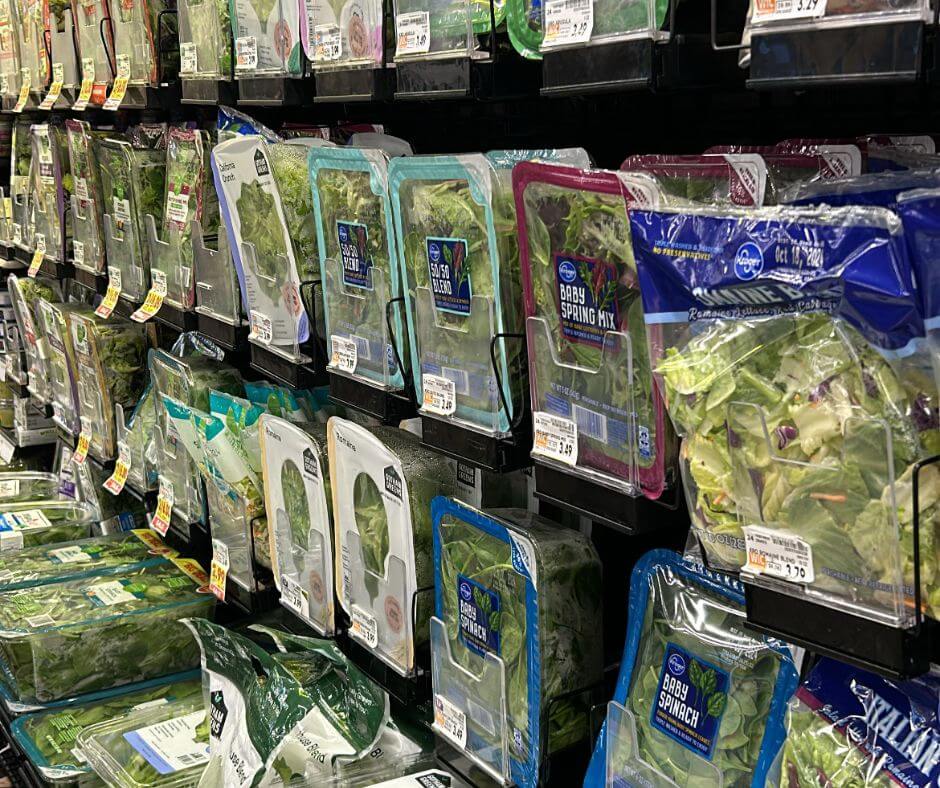
Things We Do NOT Buy (Regularly)
- Pre-packaged ready to eat foods. Not only are they always more expensive (I call it the convenience tax) but, these are the foods that always have e-coli contaminations, re-calls, etc. This would be things like…. pre-cut fruits or veggies, bagged salads, pre-made juices, pre-made wraps, desserts, or packaged sushi, sandwiches, etc. We buy all produce whole, and cut them ourselves, make desserts from scratch (or mostly a box).
- Frozen Foods. Very verrrry rarely will we have frozen foods in the freezer. I’m talking about frozen meals, or vegetables. We use our freezer when stocking up on deals like meats, or cheeses, and freeze those items, while keeping fresh foods in the fridge.
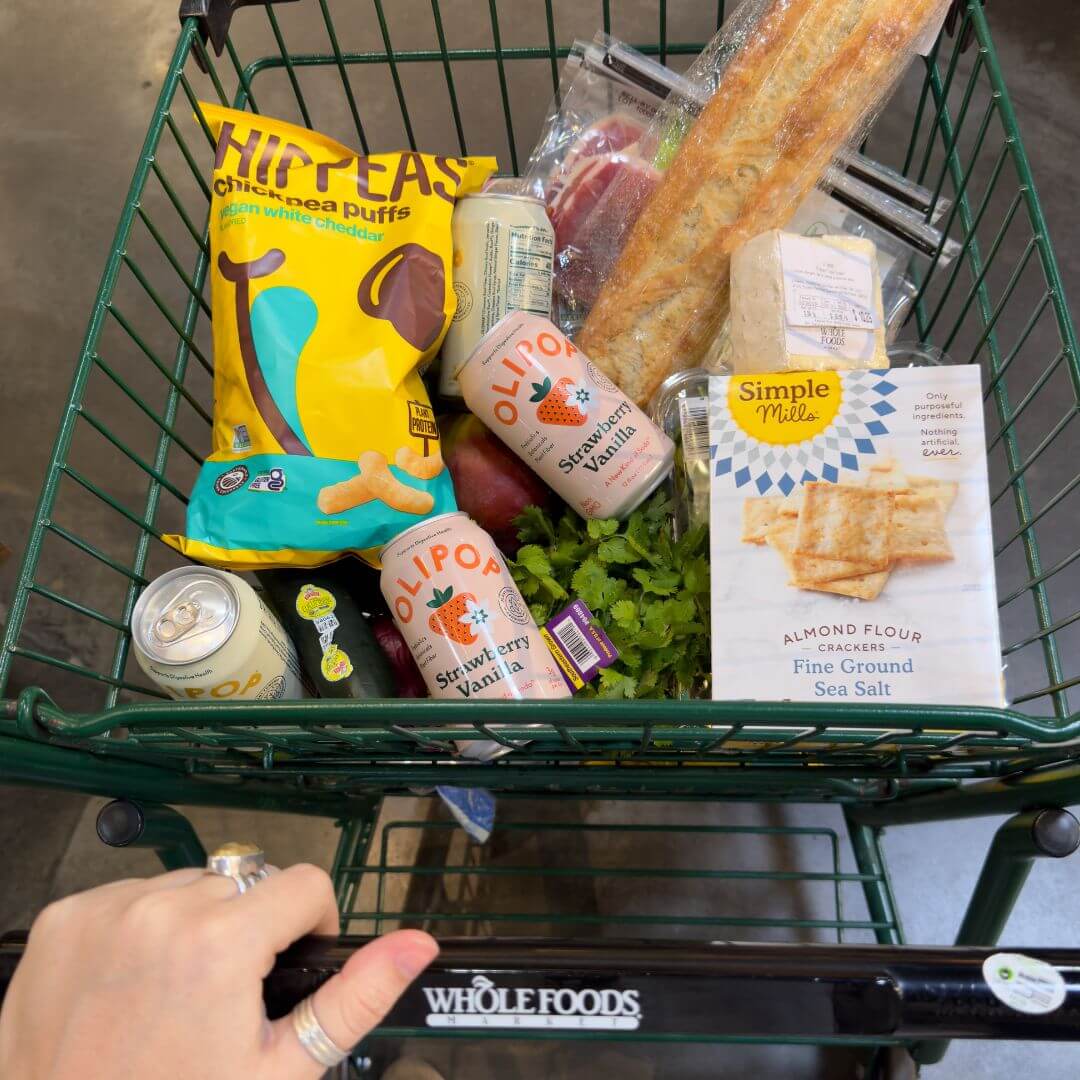
- Fancy single-serve drinks. Olipop, Kambuchas, energy drinks like Alani, green juices, immunity shots… $$$. Unless we are going somewhere where we need to grab a quick one-off drink, like to the beach (although normally we’d just pack out water bottles, and I’d probably add some juice), we do NOT stock these sort of one-off drinks in our fridge.
- Single-Serve foods. Anything package individually is going to cost extra (again, the convenience tax). We buy everything in regular sizes, and divvy it up if needed. Examples would be things like chips, snacks, cereals, individual sized items like ice cream pints, or those little tiny 1 oz sample size Haagen Dazs (I may or may not have had a phase with these).
- Alcohol. This is one we never buy! Cutting out alcohol was the single best decision for our health and our wallet! Alcohol is so expensive, and always left me feeling like absolute crud the next day, no matter if I had even just one glass or wine or splurged with a couple of glasses (or a whole bottle, let’s be honest here) of wine! And at $10 – $20 a bottle each week, this was a big hit to the grocery budget we no longer have to worry about.
- Baby Specific Foods. Call me the worst mama everrrrr but we don’t buy foods geared towards babies specifically. No bright, fun packaging, no purees, no squeeze pouches, no little treats. We feed our babies what we’re having (when they are age appropriate). It’s saved us so much money just giving them little bits of our own meals! Plus, I’ve always nursed (or pumped) for my babies, which I am so so grateful to be able to do, as its a hugeeee money saver!
Meal Planning Can be Easy!
And there you have it! Meal planning on a budget doesn’t have to be some crazy feat you go through each week! With a little planning and swapping things around, you can really make a huge impact on your budget!
I’ve really found being flexible, and having the self-control and awareness to realize, ok maybe I won’t have my Haagen-Dazs ice cream bars this week because they’re $8 (for three little bars) but maybe next week they’ll be buy one get one free!
A fun little game my husband and I like to play is… who can get the higher savings percentage (wowww we sound so exciting lol, but that’s your 30’s for you lol). At the bottom of most grocery receipts they’ll be a percentage of savings you hit for your trip. It’s so cool to see the amount you’ve saved just by being a little mindful!
Ok, I have to know… anyone else wait to put their club card phone number in until the checker rings all of your items? I like to wait so I can see the total go from normal to all the discounts final cost! It’s so fun to watch the number go down!
Truly don’t think I could sound like more of a mom right now! I hope you use these tips and save some major dough!